
Experienced cataract and refractive specialists, with access to subspecialists in retina, glaucoma and cornea
Cataract and Refractive Surgery
Beyond glasses: customized vision restoration
Precision cataract and advanced refractive surgery
Our cataract and refractive surgery specialty focuses on restoring sharp, natural vision by treating the eye’s natural lens and cornea. It is designed for anyone struggling with cloudy vision from cataracts or seeking freedom from glasses and contact lenses for nearsightedness, farsightedness, astigmatism, or reading difficulties. Patients can expect a thorough, personalized eye evaluation, advanced diagnostic technology, and a customized treatment plan tailored to their unique lifestyle and visual goals.
7,000+
Surgeries performed
Same-day
Diagnostic testing
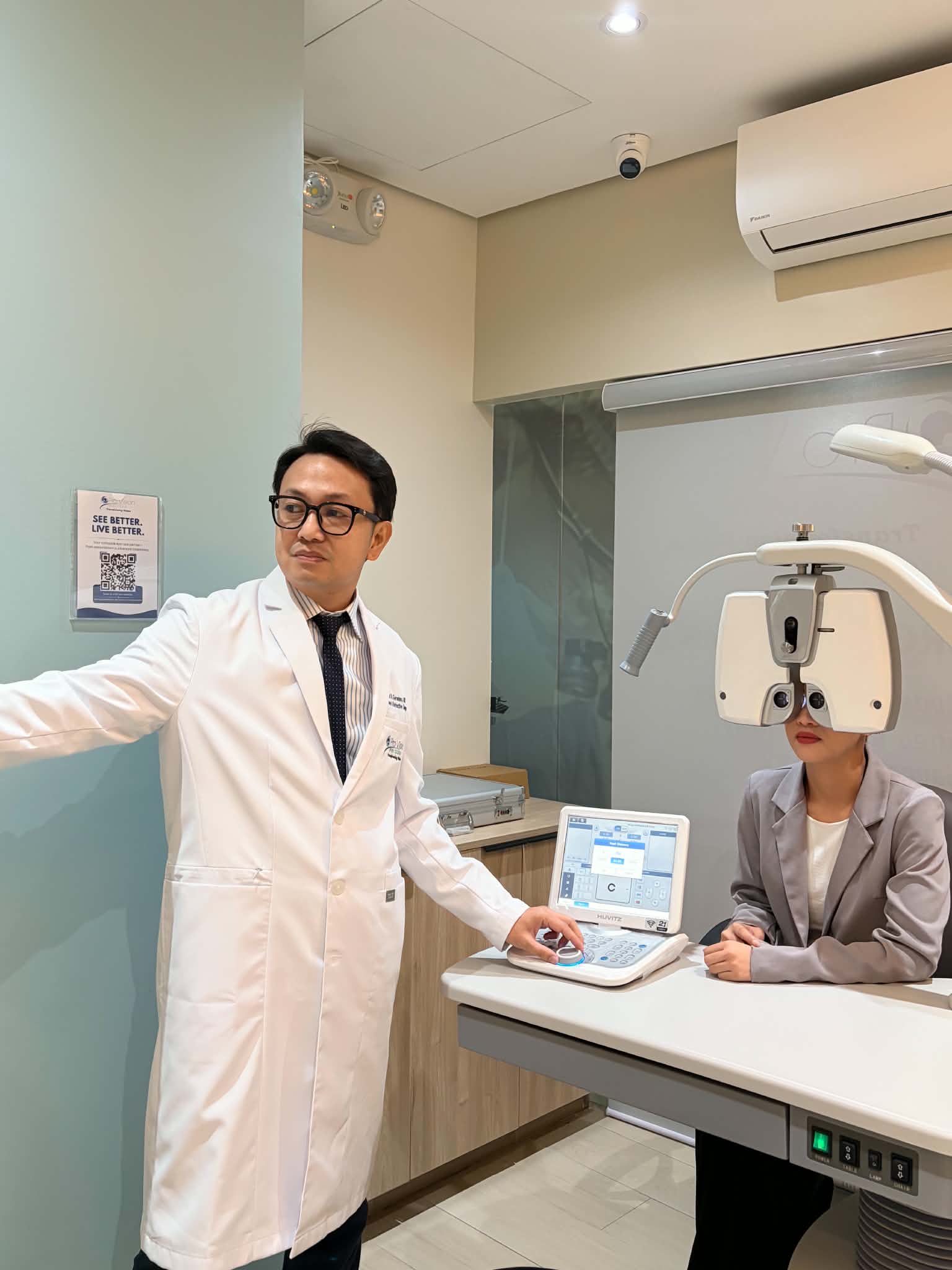
Conditions we diagnose and treat
Refractive errors happen when the eye’s shape prevents light from focusing directly on the retina, causing blurred vision. Presbyopia and cataract are natural changes that arrive with age.
.
Refractive error
Myopia (nearsightedness)
Close objects look clear, but distant objects appear blurry.
Refractive error
Hyperopia (farsightedness)
Distant objects are generally easier to see, while nearby objects require extra effort or look fuzzy.
Refractive error
Astigmatism
An irregularly curved cornea or lens stretches and distorts light, causing blurry or shadowy vision at all distances.
Age-related
Presbyopia
A natural, gradual change usually noticed after age 40, where the eye's internal lens loses its youthful flexibility. This makes focusing on close-up tasks, like reading a menu, looking at a smartphone, or threading a needle, increasingly difficult without reading glasses.
Age-related
Cataract
A common condition where the eye's clear natural lens gradually becomes cloudy and yellowed over time. It often feels like looking through a foggy window or dirty camera lens, leading to faded colors, poor night vision, and bothersome glare from headlights.
Commonly treated
Refractive errors, cataract
Urgent or time-sensitive
Sudden vision changes, eye pain, glaucoma
Related to ageing
Presbyopia, cataract
Related to other conditions
Cataracts may worsen with diabetes, medications, lifestyle, trauma
Who it affects
Refractive errors at all ages; cataracts in seniors
Symptoms and warning signs
These symptoms may indicate that you should consult a specialist under this service.
Blurred or cloudy vision
Difficulty reading or seeing far
Glare or halos around lights
Frequent change in eyeglass grade
Eye strain or headaches
These signs may be time-sensitive. Please contact us promptly or go to the nearest emergency facility.
- Sudden loss of vision
- Severe eye pain
- Sudden increase in glare or distortion
- Eye trauma
Who should consider this service?
Conditions we diagnose and treat
Refractive errors happen when the eye’s shape prevents light from focusing directly on the retina, causing blurred vision. Presbyopia and cataract are natural changes that arrive with age.
.
Routine
Visual Acuity Test
Measures current clarity of vision.
Routine
Refraction / Autorefraction
Estimates total refractive error of the eye.
Refractive error
Slit Lamp Examination
Evaluates external features and anterior segment of the eye.
Pre-operative
Biometry
Measures eye parameters for IOL calculation.
Pre-operative
Optical Coherence Tomography (OCT)
Assess retina before surgery to assess prognosis of the eye.
Routine
Tonometry
Measures intraocular pressure.
Routine tests are visual acuity, refraction and slit lamp. Dilation is often required for cataract evaluation, so arrange transport and plan ahead if dilating drops are expected.
Treatments and procedures
Eyeglasses
Correct refractive errors.
Clinic
Contact Lenses
Alternative vision correction.
Clinic
Medications / Eye Drops
Manage associated conditions.
Clinic
Cataract Surgery
Removal of cloudy lens.
Clinic or hospital
Intraocular Lens (IOL) Implantation
Replacement with artificial lens.
Clinic or hospital
YAG Laser Capsulotomy
Treats secondary cataract.
Clinic
Advanced Vision Correction (e.g. ICL)
Implantable lens for high grades.
Clinic or hospital
Treatment recommendations depend on the patient's condition and examination results. We avoid promising specific outcomes, and not every eye is a candidate for every procedure.
Ask which option suits your eyesWhat patients can expect
1
Before the consultation
- Booking an appointment is recommended
- Bring previous eye test results & medical records
- Bring a list of your medications
- Avoid wearing contact lenses if possible
- Arrange transport if dilation is expected
2
During the consultation
- Booking an appointment is recommended
- Bring previous eye test results & medical records
- Bring a list of your medications
- Avoid wearing contact lenses if possible
- Arrange transport if dilation is expected
3
After the consultation
- Booking an appointment is recommended
- Bring previous eye test results & medical records
- Bring a list of your medications
- Avoid wearing contact lenses if possible
- Arrange transport if dilation is expected
WHY EARLY DIAGNOSIS MATTERS
Your eyes naturally change over time
Struggling with blurry vision, eye strain, or dull colors doesn’t have to be part of daily life. Identifying focusing issues and cataracts early allows your doctor to protect your eye health, prevent unnecessary visual fatigue, and offer a wider range of safe, gentle treatment options. Whether it’s enjoying crisp focus without the hassle of glasses or treating a cataract before it hardens and affects your safety, early care ensures you keep seeing life clearly, comfortably, and confidently.
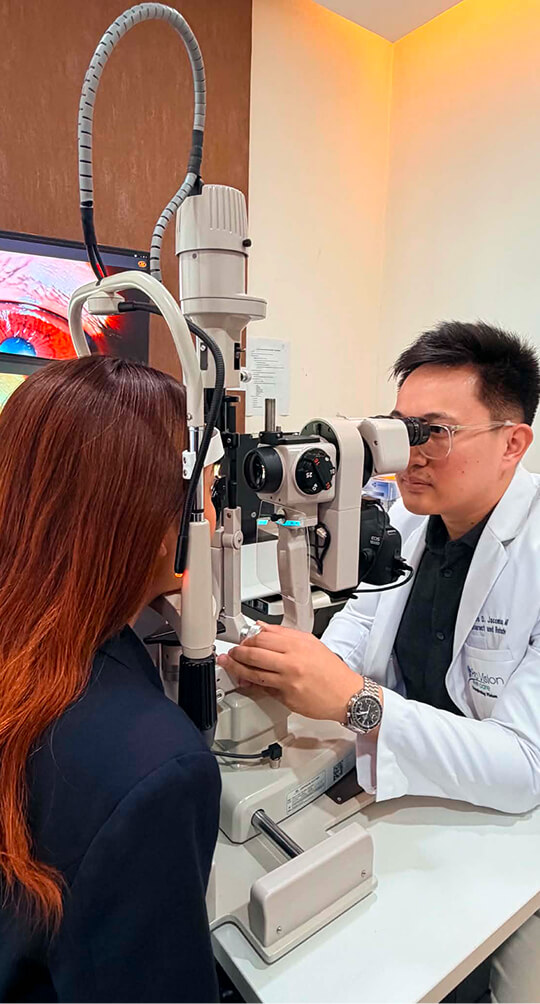
Why choose ProVision Eye Care?
Your vision is as unique as your fingerprint, and restoring it demands an uncompromising standard of precision, experience, and personalized care. When you trust us with your sight, you receive:
EQUIPMENT & TECHNOLOGY
Optical biometry
OCT
Fundus imaging
Specular microscopy
Slit lamp
Autorefractor / keratometer
Advanced surgical microscopes and IOL options
Clear, effortless vision transforms every aspect of how you experience the world. Our mission is not just correcting your eyesight, but giving you the visual freedom to live your life to the fullest.
MEET THE DOCTORS
Our General Ophthalmology specialists
All board-certified — MD, Diplomate, Philippine Board of Ophthalmology.
 See Schedule
Advanced cataract, cornea and refractive
Dr. Mateo Andro Geronimo
MD, Board Certified Ophthalmologist, Fellow PAO, Fellow PCSI, Founding Member RSSP
 See Schedule
Cornea, external diseases and refractive
Dr. Justin Alan Yao
MD, Board Certified Ophthalmologist

Not sure who to see?
Book a general consultation and we will match you with the right specialist for your needs.
Questions patients ask
Can’t find what you’re looking for? Our team is happy to help. Just reach out.
Does laser vision correction or cataract surgery hurt?
No. Your eyes are completely numbed with specialized anesthetic drops before the procedure begins. Most patients feel only mild pressure for a few seconds during specific steps, but no sharp pain. A mild, temporary scratchy or gritty sensation is normal for a few hours post-procedure as the surface heals.
How long does the recovery take, and when can I return to work?
Visual recovery is rapid for most modern procedures.
LASIK and ICL: Most patients notice dramatically clearer vision within 24 to 48 hours and can return to office work, screen use, and light daily routines the very next day.
Cataract surgery: Vision often clears within 1 to 3 days, with complete ocular stabilization over 3 to 4 weeks. Most non-strenuous work can be resumed after 2 to 3 days.
Am I a better candidate for LASIK or ICL (Implantable Collamer Lens)?
Candidacy depends entirely on your corneal thickness, eye shape, and prescription level.
LASIK gently reshapes the cornea with a laser and is ideal for mild to moderate nearsightedness, farsightedness, and astigmatism with healthy corneal tissue.
ICL places a microscopic, flexible lens inside the eye without removing any corneal tissue, making it the preferred choice for patients with thin corneas, dry eye tendencies, or very high prescriptions. A comprehensive diagnostic mapping determines the safest option for your eyes.
Will I still need reading glasses after cataract surgery?
It depends on the intraocular lens (IOL) you select.
Standard monofocal lenses are typically set for clear distance vision such as driving and TV, meaning you will still need reading glasses for phones, computers, and books.
Advanced premium lenses (multifocal, extended depth of focus, or trifocal IOLs) are engineered to provide a continuous range of focus, greatly reducing or eliminating your dependence on glasses for distance, intermediate, and near tasks.
Can cataracts come back after surgery?
No. Once your cloudy natural lens is removed, a cataract cannot return. However, in some individuals, the natural membrane (capsule) that supports the new artificial lens can become hazy months or years later, a condition called a posterior capsule opacification or “secondary cataract”. This is treated quickly and painlessly in the clinic in under five minutes using a gentle YAG laser.
How long do the results of LASIK or ICL last?
The structural correction from LASIK and ICL is permanent. While the surgery permanently corrects your existing refractive error, it does not stop the natural aging of the eye. Around age 40 to 45, everyone naturally develops presbyopia, the gradual loss of close-up focusing power, which is a separate process related to the internal lens rather than your laser correction.
When is the "right time" to have cataract surgery?
Cataracts no longer need to be “ripe” or fully hardened before removal. In modern microsurgery, the right time is as soon as the cataract begins interfering with your quality of life, such as making night driving stressful, dimming colors, causing frequent prescription changes, or impairing your hobbies and reading. Treating cataracts earlier is generally safer, gentler, and yields a faster recovery.
What happens during the initial consultation?
Your first visit is an in-depth diagnostic evaluation that takes approximately 1.5 to 2 hours. We perform comprehensive examination, diagnostic tests, and a dilated retinal examination. Afterward, your surgeon reviews the scans directly with you, explains your suitability for each procedure, and customizes a treatment plan built around your visual goals.
We accept major health cards

Maxicare

Intellicare

Medicard

PhilCare

iCare

Pacific Cross

Sunlife

Amaphil

Etiqa

HPPI

Cocolife

Valucare

Avega

Medasia
Coverage for elective refractive procedures varies by plan. We will help you check your benefits before scheduling.
Verify your coverage with usBOOK AN APPOINTMENT
See Better. Live Better.
Book a consultation with our ophthalmologist for a comprehensive eye examination and personalized treatment plan. Early evaluation helps protect your vision and detect eye conditions before they progress.
Call us
Visit us
G/F Silver City, Tiendesitas Complex,
Ortigas East, Brgy. Ugong, Pasig City 1604
Clinic hours
Monday – Saturday, 10:00 AM – 7:00 PM
Request an appointment
Explore our other eye care services
General ophthalmology
Comprehensive eye care for patients of every age.
Diagnostic eye tests
Advanced imaging and vision testing.
Glaucoma service
Screening and management of eye pressure.
Retina service
Care for the retina and back of the eye.
Cornea and external disease
Treatment of the cornea and eye surface.
Pediatric ophthalmology
Specialised eye care for children.
Important medical notes and disclaimers
Final diagnosis requires an in-person consultation. Treatment depends on clinical findings and patient needs, and not all patients are candidates for surgery or advanced procedures. Cataract progression varies per patient. This content is for educational purposes only.